

Filter Theory And The Enneagram
Margo Plater
How Filter Theory Relates to the Enneagram and Its Manifestation in Different Enneagram Results
Filter Theory, a concept in psychology and sociology, offers a framework for understanding how individuals select potential partners by filtering through a series of criteria, ultimately narrowing down their choices based on compatibility. When this theory is juxtaposed with the Enneagram, a personality typing system that categorizes individuals into nine distinct types, we gain a deeper insight into how different personality types navigate the selection of partners and relationships. This article explores the connection between Filter Theory and the Enneagram, highlighting how different Enneagram types express and respond to the criteria that influence their relationships.
Understanding Filter Theory
Filter Theory, first proposed by sociologist Kerckhoff and Davis in 1962, suggests that individuals use a series of filters to screen potential partners during the process of mate selection. This theory posits that relationships develop through a series of stages, each characterized by different filtering criteria:
- Social Demography: The first filter, which includes factors like geographical proximity, social class, education, religion, and ethnicity. Individuals tend to form relationships with those who share similar backgrounds.
- Similarity in Attitudes and Values: The second filter focuses on psychological compatibility, where shared values, beliefs, and attitudes become important in determining whether a relationship will progress.
- Complementarity of Needs: The final filter involves assessing whether the partners' needs and personalities complement each other, leading to a more harmonious and satisfying relationship.
As individuals move through these filters, those who do not meet the criteria at each stage are gradually excluded from the pool of potential partners, leading to the selection of the most compatible mate.
Overview of the Enneagram System
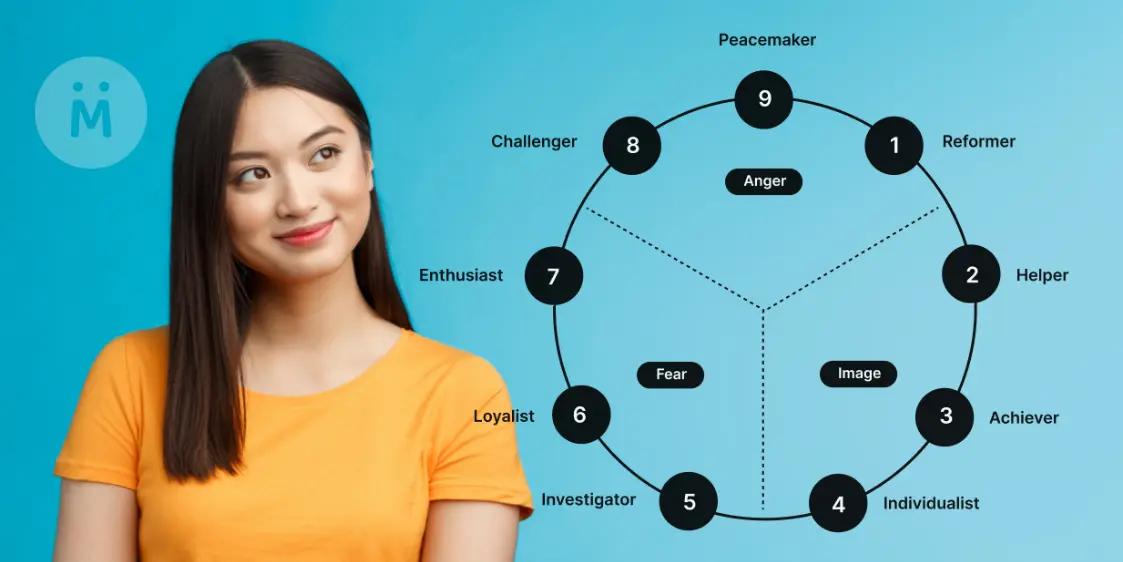
The Enneagram is a personality system that divides people into nine distinct types, each with its own core motivations, fears, and ways of interacting with the world. These types are:
- Type 1 - The Reformer: Principled, perfectionistic, and driven by a desire to improve themselves and others.
- Type 2 - The Helper: Generous, people-pleasing, and motivated by a need to be loved and appreciated.
- Type 3 - The Achiever: Success-oriented, image-conscious, and driven by a desire for recognition and admiration.
- Type 4 - The Individualist: Creative, introspective, and motivated by a need for authenticity and self-expression.
- Type 5 - The Investigator: Analytical, detached, and driven by a desire for knowledge and understanding.
- Type 6 - The Loyalist: Responsible, anxious, and motivated by a need for security and support.
- Type 7 - The Enthusiast: Optimistic, adventurous, and driven by a need for variety and excitement.
- Type 8 - The Challenger: Assertive, protective, and motivated by a desire for control and autonomy.
- Type 9 - The Peacemaker: Easygoing, accommodating, and driven by a need for peace and harmony.
Each Enneagram type has its unique approach to relationships, influencing how they apply filters during the process of selecting partners.
Connecting Filter Theory with the Enneagram
When examining Filter Theory in the context of the Enneagram, it becomes evident that each personality type applies filters in their own distinct way, guided by their core motivations, fears, and relational preferences. Here’s how Filter Theory manifests across different Enneagram types:
Type 1 - The Reformer and Filter Theory
Reformers are guided by a strong sense of duty, ethics, and a desire for improvement. In the context of Filter Theory, Type 1s are likely to apply filters that emphasize moral alignment and shared values. Social demography plays a role as they seek partners who share similar educational backgrounds, religious beliefs, or social values, ensuring that the relationship aligns with their ethical standards.
As they move through the filtering process, Reformers place significant emphasis on the similarity of attitudes and values. They are drawn to partners who share their commitment to self-improvement and who uphold similar standards of integrity and responsibility. Complementarity of needs is assessed based on the partner's willingness to grow and improve, ensuring that the relationship supports their mutual pursuit of a principled life.
Type 2 - The Helper and Filter Theory
Helpers are motivated by a deep need to be loved and appreciated, often focusing on emotional connection and support. According to Filter Theory, Type 2s are likely to apply filters that prioritize social demography in terms of proximity to communities where they can nurture relationships, such as within social, religious, or family circles.
As they progress through the filters, Helpers emphasize similarity in attitudes and values, particularly in terms of kindness, compassion, and the willingness to care for others. They are attracted to partners who value emotional connection and who reciprocate their care and affection. Complementarity of needs is assessed based on the partner’s ability to appreciate and return the Helper’s love, ensuring that the relationship fulfills their deep-seated need for emotional validation and support.
Type 3 - The Achiever and Filter Theory
Achievers are driven by success, recognition, and a desire to be admired. In the framework of Filter Theory, Type 3s are likely to filter potential partners through social demography, focusing on those who share a similar social or professional status, ensuring that the relationship enhances their public image.
As they move through the filtering process, Achievers emphasize similarity in attitudes and values related to ambition, success, and social recognition. They are drawn to partners who share their drive for achievement and who can contribute to their goals. Complementarity of needs is assessed based on the partner’s ability to support their ambitions and to enhance their status, ensuring that the relationship is mutually beneficial in terms of success and recognition.
Type 4 - The Individualist and Filter Theory
Individualists are motivated by a need for authenticity and self-expression. According to Filter Theory, Type 4s are likely to apply filters that prioritize social demography in terms of proximity to artistic, creative, or unconventional communities where they can find like-minded individuals.
As they progress through the filters, Individualists place significant emphasis on similarity in attitudes and values, particularly in terms of emotional depth, creativity, and a shared appreciation for uniqueness. They are attracted to partners who understand and appreciate their individuality and who can engage with them on a deep emotional level. Complementarity of needs is assessed based on the partner’s ability to validate their sense of identity and to share in their pursuit of authentic self-expression.
Type 5 - The Investigator and Filter Theory
Investigators are driven by a desire for knowledge, understanding, and autonomy. In the context of Filter Theory, Type 5s are likely to apply filters that emphasize social demography in terms of intellectual compatibility, seeking partners within academic, scientific, or intellectual circles where they can engage in meaningful discussions.
As they move through the filtering process, Investigators emphasize similarity in attitudes and values related to intellectual curiosity, independence, and a shared passion for learning. They are drawn to partners who respect their need for autonomy and who can engage with them in intellectually stimulating ways. Complementarity of needs is assessed based on the partner’s ability to provide intellectual companionship while respecting their need for personal space and independence.
Type 6 - The Loyalist and Filter Theory
Loyalists are motivated by a need for security and support. According to Filter Theory, Type 6s are likely to apply filters that prioritize social demography in terms of proximity to safe, stable environments where they can build secure relationships, such as within close-knit communities or organizations that provide a sense of belonging.
As they progress through the filters, Loyalists place significant emphasis on similarity in attitudes and values, particularly in terms of trust, loyalty, and a shared commitment to security. They are attracted to partners who can provide reassurance and who share their desire for a stable, secure relationship. Complementarity of needs is assessed based on the partner’s ability to offer reliability and to help create a safe, supportive relationship that addresses their fears and anxieties.
Type 7 - The Enthusiast and Filter Theory
Enthusiasts are driven by a desire for excitement, new experiences, and enjoyment. In the context of Filter Theory, Type 7s are likely to apply filters that prioritize social demography in terms of proximity to dynamic, stimulating environments where they can find partners who share their zest for life.
As they move through the filtering process, Enthusiasts emphasize similarity in attitudes and values related to adventure, spontaneity, and a shared love of new experiences. They are drawn to partners who can match their energy and who are open to exploring new possibilities. Complementarity of needs is assessed based on the partner’s ability to keep up with their fast-paced lifestyle and to contribute to a relationship filled with excitement and variety.
Type 8 - The Challenger and Filter Theory
Challengers are motivated by a need for control, power, and autonomy. According to Filter Theory, Type 8s are likely to apply filters that prioritize social demography in terms of proximity to environments where they can assert influence and find partners who respect their strength and independence.
As they progress through the filters, Challengers place significant emphasis on similarity in attitudes and values related to power, autonomy, and mutual respect. They are attracted to partners who are confident and who can stand up to them without being overpowered. Complementarity of needs is assessed based on the partner’s ability to respect their autonomy while providing loyalty and support, ensuring that the relationship is based on mutual strength and respect.
Type 9 - The Peacemaker and Filter Theory
Peacemakers are motivated by a desire for harmony, peace, and connection. In the context of Filter Theory, Type 9s are likely to apply filters that prioritize social demography in terms of proximity to peaceful, stable environments where they can build harmonious relationships, such as within family settings or close-knit communities.
As they move through the filtering process, Peacemakers emphasize similarity in attitudes and values related to peace, harmony, and a shared commitment to avoiding conflict. They are attracted to partners who value tranquility and who contribute to a balanced, stress-free relationship. Complementarity of needs is assessed based on the partner’s ability to provide emotional stability and to maintain harmony, ensuring that the relationship fulfills their need for peace and connection.
Key Takeaways
The relationship between Filter Theory and the Enneagram offers a unique perspective on how different personality types approach the selection of partners and relationships. Each Enneagram type applies filters in a way that aligns with their core motivations, fears, and relational needs, guiding them towards partners who are most compatible with their personality and life goals. By examining these dynamics through the lens of Filter Theory, we gain deeper insights into how individuals navigate the complex process of mate selection, ensuring that their relationships are fulfilling and aligned with their deepest values and desires. Whether through the pursuit of moral alignment, emotional connection, intellectual compatibility, or shared adventures, the intersection of these two frameworks illuminates the diverse ways in which we seek and maintain meaningful relationships.

