

Rusbult's Investment Model and the Enneagram
Margo Plater
How Rusbult's Investment Model Relates to the Enneagram and Its Manifestation in Different Enneagram Results
Rusbult's Investment Model, a theory rooted in social psychology, provides a framework for understanding relationship commitment based on satisfaction, investment, and quality of alternatives. When examined alongside the Enneagram, a personality typing system that categorizes individuals into nine distinct types, the model offers valuable insights into how different personality types approach commitment, maintain relationships, and respond to challenges within those relationships. This article explores the connection between Rusbult's Investment Model and the Enneagram, revealing how various Enneagram types manifest their unique characteristics in the context of relational commitment.
Understanding Rusbult's Investment Model
Rusbult's Investment Model, developed by Caryl Rusbult in the 1980s, seeks to explain why individuals remain committed to relationships, even when faced with challenges. The model posits that relationship commitment is influenced by three main factors:
- Satisfaction: The degree to which individuals feel fulfilled and happy in their relationship, based on the rewards (e.g., love, companionship) they receive versus the costs (e.g., conflicts, sacrifices) they incur.
- Investment: The resources (time, emotional energy, shared experiences) individuals have invested in the relationship, which would be lost if the relationship ended.
- Quality of Alternatives: The perception of whether the available alternatives (other potential partners, independence) are better than the current relationship.
These factors interact to determine the level of commitment individuals have to their relationship. High satisfaction, significant investment, and low-quality alternatives contribute to stronger commitment, whereas low satisfaction, minimal investment, and high-quality alternatives may lead to weaker commitment.
Overview of the Enneagram System
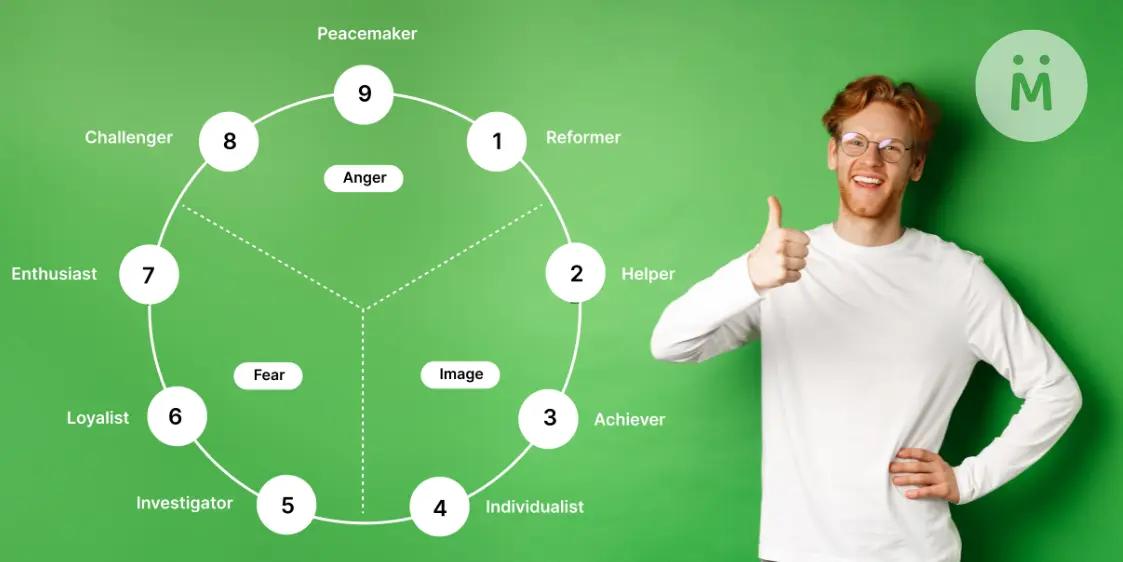
The Enneagram is a personality system that divides people into nine distinct types, each characterized by core motivations, fears, and ways of interacting with the world. These types are:
- Type 1 - The Reformer: Principled, perfectionistic, and driven by a desire to improve themselves and the world.
- Type 2 - The Helper: Generous, people-pleasing, and motivated by a need to be loved and needed.
- Type 3 - The Achiever: Success-oriented, image-conscious, and driven by a desire for recognition and admiration.
- Type 4 - The Individualist: Creative, introspective, and motivated by a need for authenticity and self-expression.
- Type 5 - The Investigator: Analytical, detached, and driven by a desire for knowledge and understanding.
- Type 6 - The Loyalist: Responsible, anxious, and motivated by a need for security and support.
- Type 7 - The Enthusiast: Optimistic, adventurous, and driven by a need for variety and excitement.
- Type 8 - The Challenger: Assertive, protective, and motivated by a desire for control and autonomy.
- Type 9 - The Peacemaker: Easygoing, accommodating, and driven by a need for peace and harmony.
Each Enneagram type brings unique traits to their relationships, influencing how they approach commitment and how they assess satisfaction, investment, and alternatives within the context of Rusbult's Investment Model.
Connecting Rusbult's Investment Model with the Enneagram
When we explore Rusbult's Investment Model through the lens of the Enneagram, it becomes clear that each personality type engages with the factors of satisfaction, investment, and alternatives in distinct ways, reflecting their core motivations and relational dynamics. Here’s how Rusbult’s model manifests across different Enneagram types:
Type 1 - The Reformer and Rusbult's Investment Model
Reformers are driven by a strong sense of duty, ethics, and a desire to improve themselves and their relationships. In the context of Rusbult's Investment Model, Type 1s are likely to assess satisfaction based on the alignment of the relationship with their moral values and the degree to which it supports personal and mutual growth. They derive satisfaction from relationships that reflect their principles and allow for self-improvement.
Investment for Reformers is often high, as they are willing to put considerable time, effort, and emotional energy into making their relationships better. They see their investment as a reflection of their commitment to doing what is right. The quality of alternatives for Type 1s may be perceived as low if they believe no other relationship could meet their high standards for integrity and moral alignment, further strengthening their commitment.
Type 2 - The Helper and Rusbult's Investment Model
Helpers are motivated by a deep need to be loved and appreciated, and they find satisfaction in relationships where their caregiving efforts are recognized and valued. Satisfaction for Type 2s is closely tied to the emotional closeness and appreciation they receive from their partner.
The investment for Helpers is often significant, as they pour considerable emotional energy and resources into nurturing their relationships. They view this investment as a way to secure love and connection, which in turn enhances their commitment. The quality of alternatives is usually low for Type 2s because they fear that leaving the relationship would mean losing the love and validation they need, reinforcing their commitment even in challenging circumstances.
Type 3 - The Achiever and Rusbult's Investment Model
Achievers are driven by success, recognition, and a desire to be admired. In Rusbult’s model, satisfaction for Type 3s is linked to how well the relationship enhances their image and supports their goals. They find satisfaction in relationships that contribute to their social standing and that align with their aspirations.
Investment for Achievers often involves both emotional and strategic resources, as they seek to maintain relationships that reflect their success and help them achieve their goals. The quality of alternatives is assessed based on whether other potential relationships or independence could better support their ambitions. If alternatives are perceived as less beneficial to their image and success, their commitment to the current relationship strengthens.
Type 4 - The Individualist and Rusbult's Investment Model
Individualists are motivated by a need for authenticity and self-expression, and they derive satisfaction from relationships that allow them to express their true selves. Satisfaction for Type 4s is closely tied to the emotional depth and authenticity they experience in the relationship.
Investment for Individualists often includes deep emotional involvement and time spent on creating meaningful connections. They view this investment as crucial to maintaining a relationship that supports their need for authenticity. The quality of alternatives may be perceived as low because Type 4s value unique and emotionally rich connections that are hard to find elsewhere, which bolsters their commitment.
Type 5 - The Investigator and Rusbult's Investment Model
Investigators are driven by a desire for knowledge, understanding, and autonomy. In the context of Rusbult’s model, satisfaction for Type 5s is linked to the intellectual stimulation and personal space they receive in the relationship. They find satisfaction in relationships that respect their need for independence while providing meaningful intellectual engagement.
Investment for Type 5s might be measured and strategic, often focused on creating a balance between closeness and autonomy. They invest in relationships that respect their boundaries and support their intellectual pursuits. The quality of alternatives may be seen as moderate, depending on whether other relationships or independence could offer better intellectual engagement or personal freedom, influencing their level of commitment accordingly.
Type 6 - The Loyalist and Rusbult's Investment Model
Loyalists are motivated by a need for security and support. Satisfaction for Type 6s in Rusbult’s model is tied to the stability and reliability of their relationships. They find satisfaction in relationships that provide a sense of safety and reassurance.
Investment for Loyalists is typically high, as they invest a lot of emotional energy into building and maintaining secure relationships. They see their investment as essential for ensuring the stability they crave. The quality of alternatives is often perceived as low because Loyalists are wary of change and the uncertainty that comes with new relationships, which strengthens their commitment to their current relationship.
Type 7 - The Enthusiast and Rusbult's Investment Model
Enthusiasts are driven by a desire for excitement, new experiences, and enjoyment. Satisfaction for Type 7s in Rusbult’s model is linked to the level of fun, adventure, and variety they experience in their relationship. They find satisfaction in relationships that are dynamic and fulfilling their need for new experiences.
Investment for Type 7s may fluctuate, as they invest in relationships that continue to provide excitement and stimulation. However, if a relationship becomes routine or predictable, they might perceive the quality of alternatives as high, particularly if other options promise more excitement. This perception can influence their level of commitment, as they may seek to keep their options open to avoid feeling trapped.
Type 8 - The Challenger and Rusbult's Investment Model
Challengers are motivated by a need for control, power, and autonomy. Satisfaction for Type 8s in Rusbult’s model is tied to the degree of autonomy and respect they receive in the relationship. They find satisfaction in relationships where they can assert their strength and where their independence is respected.
Investment for Type 8s is often substantial, as they commit to relationships that align with their desire for control and where their authority is recognized. The quality of alternatives may be perceived as low if Type 8s believe that other relationships would not offer the same level of respect or autonomy, thereby strengthening their commitment to their current relationship.
Type 9 - The Peacemaker and Rusbult's Investment Model
Peacemakers are motivated by a desire for harmony, peace, and connection. Satisfaction for Type 9s in Rusbult’s model is linked to the level of peace and stability in their relationship. They find satisfaction in relationships that are conflict-free and harmonious.
Investment for Type 9s is often high, as they put considerable effort into maintaining peace and avoiding conflict in their relationships. They view their investment as crucial to sustaining a harmonious relationship. The quality of alternatives is typically perceived as low because Peacemakers value stability and are reluctant to disrupt their sense of peace by pursuing new relationships, which reinforces their commitment to their current relationship.
Key Takeaways
The relationship between Rusbult's Investment Model and the Enneagram offers a detailed understanding of how different personality types approach commitment in relationships. Each Enneagram type engages with the factors of satisfaction, investment, and alternatives in ways that reflect their core motivations, fears, and relational needs. By examining these dynamics through the lens of Rusbult’s model, we gain deeper insights into how individuals sustain commitment, navigate relational challenges, and make decisions about their relationships. Whether through the pursuit of security, emotional depth, autonomy, or excitement, the intersection of these two frameworks illuminates the diverse strategies we use to maintain and deepen our most significant connections.

