

Sexual Strategies Theory and the Enneagram
Margo Plater
How Sexual Strategies Theory Relates to the Enneagram and Its Manifestation in Different Enneagram Results
Sexual Strategies Theory (SST), a framework rooted in evolutionary psychology, provides insights into how individuals pursue and select mates based on reproductive goals and adaptive strategies. The Enneagram, a personality typing system, categorizes individuals into nine distinct types, each with its own set of motivations, fears, and relational dynamics. Understanding how Sexual Strategies Theory relates to the Enneagram can offer a profound understanding of how different personality types approach relationships, attraction, and mate selection. This article delves into the connection between these two frameworks, revealing how various Enneagram types express and respond to the mating strategies outlined in SST.
Understanding Sexual Strategies Theory
Sexual Strategies Theory, developed by David Buss and colleagues, posits that human mating behaviors are influenced by evolutionary pressures that have shaped distinct strategies for short-term and long-term mating. These strategies vary between sexes due to different reproductive challenges faced by men and women throughout evolutionary history.
Key concepts in SST include:
- Short-Term Mating Strategies: These involve seeking partners for brief encounters, often driven by the desire for genetic diversity and immediate reproductive opportunities. Short-term strategies are typically associated with traits like physical attractiveness and sexual availability.
- Long-Term Mating Strategies: These involve seeking partners for enduring relationships, emphasizing traits such as reliability, resource availability, and emotional stability. Long-term strategies prioritize commitment, shared goals, and the well-being of offspring.
- Sex Differences: Men and women are theorized to approach mating differently due to distinct evolutionary pressures. Men, generally, may prioritize physical attractiveness and youth (indicators of fertility), while women may prioritize resource acquisition and stability (indicators of a partner’s ability to support offspring).
These strategies are not mutually exclusive and can coexist within individuals, influencing how they navigate romantic and sexual relationships.
Overview of the Enneagram System
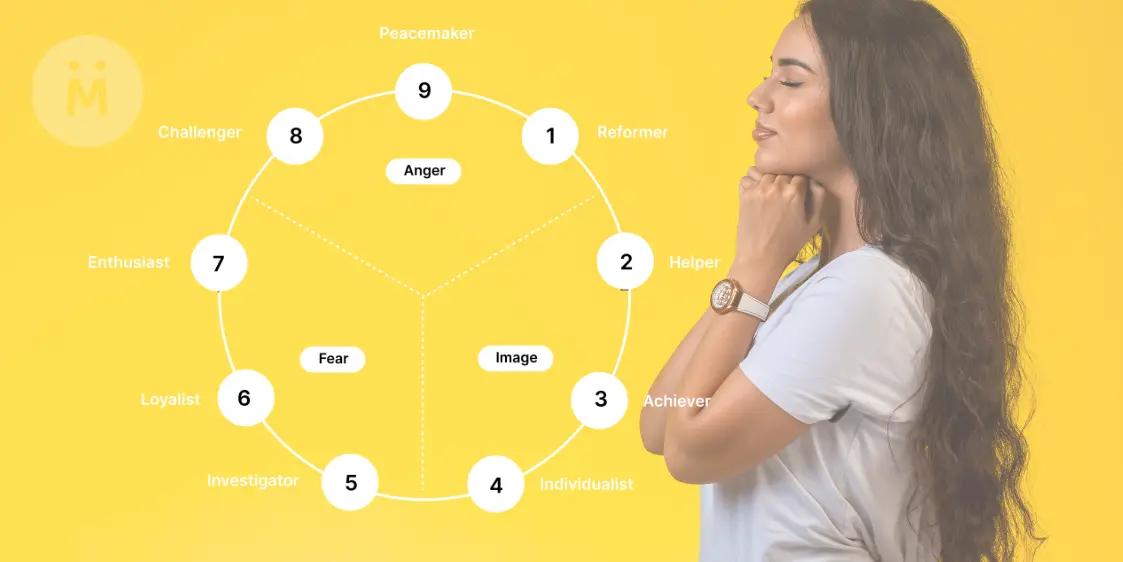
The Enneagram categorizes people into nine personality types, each characterized by a core motivation and fear. These types influence how individuals approach relationships, including their mating strategies.
The nine Enneagram types are:
- Type 1 - The Reformer: Principled and perfectionistic, driven by a need to improve themselves and the world.
- Type 2 - The Helper: Generous and people-pleasing, motivated by a desire to be loved and needed.
- Type 3 - The Achiever: Success-oriented and image-conscious, driven by a desire for recognition and admiration.
- Type 4 - The Individualist: Creative and introspective, motivated by a need for authenticity and self-expression.
- Type 5 - The Investigator: Analytical and detached, driven by a desire for knowledge and understanding.
- Type 6 - The Loyalist: Responsible and anxious, motivated by a need for security and support.
- Type 7 - The Enthusiast: Optimistic and adventurous, driven by a need for variety and excitement.
- Type 8 - The Challenger: Assertive and protective, motivated by a desire for control and autonomy.
- Type 9 - The Peacemaker: Easygoing and accommodating, driven by a need for peace and harmony.
Each Enneagram type influences how individuals pursue romantic relationships and select mates, aligning with the strategies highlighted in Sexual Strategies Theory.
Connecting Sexual Strategies Theory with the Enneagram
When examining Sexual Strategies Theory in the context of the Enneagram, it becomes evident that each personality type has distinct approaches to mating strategies, influenced by their core motivations, fears, and interpersonal dynamics. Here’s how SST manifests across different Enneagram types:
Type 1 - The Reformer and Sexual Strategies Theory
Reformers are driven by a desire for integrity, self-improvement, and a strong sense of duty. In the context of Sexual Strategies Theory, Type 1s are likely to pursue long-term mating strategies, seeking partners who share their values and commitment to ethical living. They prioritize stability, responsibility, and moral alignment in their relationships, aligning with long-term strategies that emphasize reliability and shared life goals.
Reformers may be less inclined towards short-term mating strategies, as they often view such relationships as inconsistent with their values. When selecting a mate, they are likely to focus on traits that reflect a commitment to self-improvement and moral integrity, seeking partners who can contribute to a stable and principled life together.
Type 2 - The Helper and Sexual Strategies Theory
Helpers are motivated by a deep need to be loved and appreciated, often placing the needs of others above their own. In Sexual Strategies Theory, Type 2s are likely to engage in both short-term and long-term mating strategies, depending on their emotional needs at the time. In short-term contexts, they might seek immediate validation and affection, driven by their desire to feel needed and valued.
However, in long-term relationships, Helpers prioritize partners who appreciate their caregiving nature and who reciprocate their emotional investment. They seek stability and security, aligning with long-term strategies that emphasize mutual support and emotional closeness. Type 2s are attracted to mates who recognize and value their nurturing tendencies, making them feel indispensable and loved.
Type 3 - The Achiever and Sexual Strategies Theory
Achievers are driven by success, recognition, and the desire to be admired. According to Sexual Strategies Theory, Type 3s may pursue both short-term and long-term mating strategies, depending on what enhances their social status and public image. In short-term contexts, they might be attracted to partners who enhance their social standing or who can be seen as a trophy partner, reflecting their own success.
For long-term relationships, Achievers are likely to seek partners who support their goals and contribute to their success. They prioritize ambition, attractiveness, and status, looking for mates who can help them achieve their objectives and maintain a successful image. Their mating strategies are often aligned with finding partners who can either bolster their public image or support their long-term ambitions.
Type 4 - The Individualist and Sexual Strategies Theory
Individualists are motivated by a deep need for authenticity and self-expression. In Sexual Strategies Theory, Type 4s are likely to seek relationships that allow for deep emotional connections, aligning with long-term mating strategies that prioritize emotional depth and mutual understanding. They are drawn to partners who appreciate their uniqueness and who can engage with them on an emotional level.
In short-term contexts, Individualists may be less interested in superficial encounters, as these do not fulfill their need for authentic connection. When pursuing a mate, Type 4s look for individuals who understand and appreciate their emotional complexity, seeking relationships that allow for profound emotional expression and connection.
Type 5 - The Investigator and Sexual Strategies Theory
Investigators are driven by a need for knowledge, understanding, and autonomy. According to Sexual Strategies Theory, Type 5s are more inclined towards long-term mating strategies, seeking partners who respect their need for independence and intellectual stimulation. They prioritize relationships that allow for deep intellectual connection and where their need for personal space is honored.
Type 5s may be less interested in short-term mating strategies, as they often require a significant emotional and intellectual investment in relationships. When selecting a mate, they look for individuals who value knowledge and who can engage with them in meaningful, intellectually stimulating ways, aligning with their preference for deep, lasting connections.
Type 6 - The Loyalist and Sexual Strategies Theory
Loyalists are motivated by a need for security and support. In the framework of Sexual Strategies Theory, Type 6s are more likely to pursue long-term mating strategies, seeking partners who can provide stability, reliability, and mutual support. They prioritize safety and commitment, looking for mates who can offer a secure, dependable relationship.
Short-term mating strategies may be less appealing to Type 6s, as these often involve uncertainty and risk, which are contrary to their need for security. Loyalists seek partners who are trustworthy and who can provide the reassurance they need to feel safe and supported in a relationship.
Type 7 - The Enthusiast and Sexual Strategies Theory
Enthusiasts are driven by a desire for excitement, new experiences, and enjoyment. According to Sexual Strategies Theory, Type 7s are likely to engage in both short-term and long-term mating strategies, depending on their current desires for novelty or stability. In short-term contexts, they may seek out partners who offer fun, adventure, and new experiences, aligning with their love of variety and spontaneity.
For long-term relationships, Enthusiasts look for partners who can keep up with their energetic lifestyle and who share their passion for adventure. They prioritize flexibility and openness, seeking mates who are willing to embrace new experiences and who can contribute to a dynamic and stimulating relationship.
Type 8 - The Challenger and Sexual Strategies Theory
Challengers are motivated by a need for control, power, and autonomy. In Sexual Strategies Theory, Type 8s are likely to engage in both short-term and long-term mating strategies, depending on their need to assert dominance or establish lasting bonds. In short-term contexts, they might seek partners who allow them to assert control and who reinforce their sense of power.
In long-term relationships, Challengers prioritize strength, independence, and mutual respect. They seek partners who can stand up to them and who respect their autonomy while also providing a sense of loyalty and protection. Type 8s are drawn to mates who match their intensity and who can engage in a relationship characterized by mutual respect and shared power dynamics.
Type 9 - The Peacemaker and Sexual Strategies Theory
Peacemakers are motivated by a desire for harmony, peace, and connection. According to Sexual Strategies Theory, Type 9s are more likely to pursue long-term mating strategies, seeking partners who can provide a calm, stable, and conflict-free relationship. They prioritize emotional security and mutual understanding, looking for mates who can offer a peaceful and harmonious connection.
Short-term mating strategies may be less appealing to Peacemakers, as they often prefer the stability and comfort of long-term relationships. They are attracted to partners who value peace and who contribute to a balanced, stress-free relationship where both parties can coexist harmoniously.
Key Takeaways
The relationship between Sexual Strategies Theory and the Enneagram provides a nuanced understanding of how different personality types approach mating and relationship dynamics. Each Enneagram type aligns with specific mating strategies based on their core motivations, fears, and relational needs. By examining these dynamics through the lens of SST, we gain deeper insights into how individuals select mates, navigate relationships, and balance short-term desires with long-term goals. Whether through the pursuit of emotional connection, stability, power, or adventure, the intersection of these two frameworks illuminates the complexities of human relationships and the diverse strategies we use to find and maintain love.

