

The Triangular Theory of Love and the Enneagram
Margo Plater
How the Triangular Theory of Love Relates to the Enneagram and Its Manifestation in Different Enneagram Results
The intersection between the Triangular Theory of Love and the Enneagram provides a compelling framework for exploring the complexities of human relationships and the diverse ways individuals experience and express love. The Triangular Theory of Love, developed by psychologist Robert Sternberg, posits that love comprises three components: intimacy, passion, and commitment. These elements combine in various ways to form different types of love. The Enneagram, a personality typing system, categorizes people into nine distinct types, each with its unique motivations, fears, and relational dynamics. By examining how these two models intersect, we can gain a deeper understanding of how different Enneagram types navigate love and relationships.
Understanding the Triangular Theory of Love
The Triangular Theory of Love suggests that love can be understood in terms of three components:
- Intimacy: This involves feelings of closeness, connectedness, and bondedness in a relationship.
- Passion: This encompasses the drives that lead to romance, physical attraction, and sexual consummation.
- Commitment: This refers to the decision to stay with someone and maintain the love over time.
According to Sternberg, different combinations of these components create different types of love, such as:
- Liking/Friendship: Intimacy alone
- Infatuation: Passion alone
- Empty Love: Commitment alone
- Romantic Love: Intimacy + Passion
- Companionate Love: Intimacy + Commitment
- Fatuous Love: Passion + Commitment
- Consummate Love: Intimacy + Passion + Commitment
These combinations illustrate the various ways love can manifest in relationships, providing a framework to explore how individuals experience love based on their personality type.
Overview of the Enneagram System
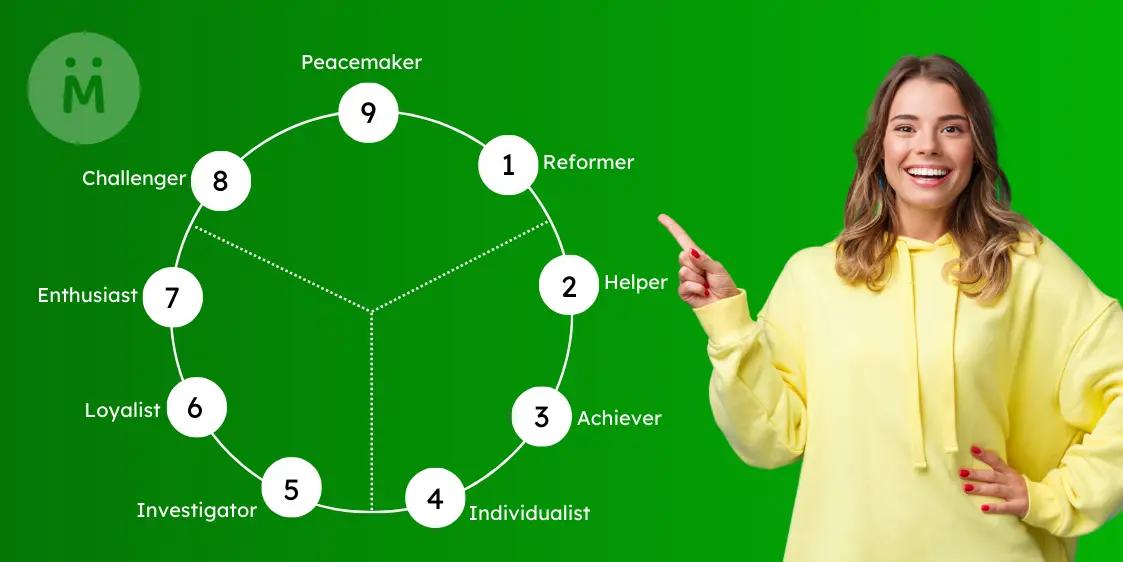
The Enneagram system identifies nine distinct personality types, each characterized by specific motivations, fears, and relational styles. These nine types are:
- Type 1 - The Reformer: Driven by a desire for perfection and moral integrity.
- Type 2 - The Helper: Motivated by the need to be loved and needed.
- Type 3 - The Achiever: Focused on success and validation.
- Type 4 - The Individualist: Seeks uniqueness and self-expression.
- Type 5 - The Investigator: Values knowledge and autonomy.
- Type 6 - The Loyalist: Seeks security and support.
- Type 7 - The Enthusiast: Pursues experiences and enjoyment.
- Type 8 - The Challenger: Desires control and autonomy.
- Type 9 - The Peacemaker: Values peace and harmony.
Each type has a distinct way of interacting with others, shaped by their core motivations and fears, which in turn influences how they experience the components of love described by the Triangular Theory.
Connecting the Triangular Theory of Love with the Enneagram
By connecting the Triangular Theory of Love with the Enneagram, we can explore how each Enneagram type expresses and experiences intimacy, passion, and commitment in their relationships.
Type 1 - The Reformer and the Triangular Theory of Love
Reformers are driven by a strong sense of right and wrong, striving for perfection in themselves and their relationships.
- Intimacy: They seek deep, meaningful connections that align with their moral values.
- Passion: Their passion is often directed towards ideals and causes, which can influence their romantic relationships, making them passionate about shared values.
- Commitment: Reformers are highly committed to relationships that reflect their principles and are likely to prioritize commitment based on shared ethical standards.
For Reformers, Consummate Love might be ideal, where intimacy, passion, and commitment are all aligned with their desire for perfection and moral integrity.
Type 2 - The Helper and the Triangular Theory of Love
Helpers are motivated by the need to be loved and appreciated, often placing others’ needs above their own.
- Intimacy: They excel in creating intimate, caring relationships, driven by their desire to be close and helpful.
- Passion: Their passion is expressed through nurturing and supporting their loved ones, making them warm and affectionate partners.
- Commitment: Helpers are deeply committed to their relationships, often going to great lengths to maintain them.
Companionate Love (intimacy + commitment) may be particularly fulfilling for Helpers, as it aligns with their nurturing nature and their need for stable, loving connections.
Type 3 - The Achiever and the Triangular Theory of Love
Achievers are driven by success and recognition, and this extends to their relationships as well.
- Intimacy: They may struggle with intimacy if it conflicts with their pursuit of success, but they value relationships that enhance their status.
- Passion: Achievers are passionate about their goals, and this passion can translate into a dynamic and ambitious approach to relationships.
- Commitment: Their commitment is often tied to the relationship’s ability to contribute to their success and public image.
Fatuous Love (passion + commitment) might appeal to Achievers, where the passion for success is matched with a strong commitment to a relationship that supports their ambitions.
Type 4 - The Individualist and the Triangular Theory of Love
Individualists seek deep emotional connections and are driven by a need to be understood and appreciated for their uniqueness.
- Intimacy: They thrive on deep, emotionally intimate relationships that allow them to express their individuality.
- Passion: Passion for Individualists is often intertwined with their creative and emotional expression.
- Commitment: They are committed to relationships that honor their uniqueness and provide emotional depth.
Romantic Love (intimacy + passion) may be most fulfilling for Individualists, as it allows for the emotional intensity and depth they crave, coupled with a strong sense of connection.
Type 5 - The Investigator and the Triangular Theory of Love
Investigators are motivated by a desire for knowledge and autonomy, often approaching relationships with caution and a need for space.
- Intimacy: They value intellectual intimacy and relationships that respect their need for independence.
- Passion: Their passion is often directed towards intellectual pursuits, which can make them deeply engaging partners for those who share their interests.
- Commitment: Commitment for Investigators is often measured and deliberate, with a preference for relationships that allow for personal space.
Liking/Friendship (intimacy) may be particularly appealing to Investigators, where intellectual connection is valued, and the relationship allows for independence without overwhelming emotional demands.
Type 6 - The Loyalist and the Triangular Theory of Love
Loyalists are driven by a need for security and support, seeking relationships that provide stability and trust.
- Intimacy: They are deeply invested in building trust and emotional safety in their relationships.
- Passion: Passion for Loyalists is often linked to their need for security, making them fiercely protective of their relationships.
- Commitment: They are highly committed, often prioritizing long-term security in their relationships.
Companionate Love (intimacy + commitment) is likely ideal for Loyalists, as it aligns with their desire for stable, trustworthy relationships that provide emotional security.
Type 7 - The Enthusiast and the Triangular Theory of Love
Enthusiasts are driven by a desire for new experiences and excitement, often seeking relationships that are fun and adventurous.
- Intimacy: They enjoy forming connections that are light-hearted and full of shared experiences.
- Passion: Their passion is for life and new adventures, making them dynamic and engaging partners.
- Commitment: Commitment can be challenging for Enthusiasts, who may fear being tied down or losing their sense of freedom.
Romantic Love (intimacy + passion) might be most suitable for Enthusiasts, providing a balance of deep connection and the excitement of shared adventures without feeling overly constrained.
Type 8 - The Challenger and the Triangular Theory of Love
Challengers are motivated by a need for control and autonomy, often approaching relationships with a focus on power dynamics.
- Intimacy: They value relationships where their strength and autonomy are respected, and where intimacy is built on mutual respect.
- Passion: Passion for Challengers is often tied to their desire to assert control and protect themselves and their loved ones.
- Commitment: They are committed to relationships that allow them to maintain control and autonomy.
Fatuous Love (passion + commitment) might appeal to Challengers, where strong passion is matched by a commitment that allows them to maintain their sense of autonomy and control.
Type 9 - The Peacemaker and the Triangular Theory of Love
Peacemakers value harmony and connection, seeking relationships that are peaceful and conflict-free.
- Intimacy: They thrive in relationships that offer emotional closeness and a sense of unity.
- Passion: Their passion is often directed towards maintaining harmony and avoiding conflict, which can lead to deep, but sometimes passive, relationships.
- Commitment: Peacemakers are committed to preserving peace and avoiding disruption in their relationships.
- Companionate Love (intimacy + commitment) is likely to be most fulfilling for Peacemakers, as it aligns with their desire for stable, harmonious relationships that provide emotional closeness without the threat of conflict.
Key Takeaways
The relationship between the Triangular Theory of Love and the Enneagram offers a nuanced perspective on how different personality types experience and express love. By understanding the core motivations and fears of each Enneagram type, we can better comprehend how individuals navigate the components of intimacy, passion, and commitment in their relationships. Whether through the pursuit of deep emotional connections, shared adventures, or secure, stable bonds, each Enneagram type approaches love with specific expectations and desires, as outlined by the Triangular Theory of Love. This intersection not only deepens our understanding of personality and love dynamics but also provides valuable insights into the diverse ways we relate to one another.

